Mesa Prieta Petroglyph Project: Connecting Youth to Culture, Science and Stewardship
Mesa Prieta Petroglyph Project – Velarde, NM
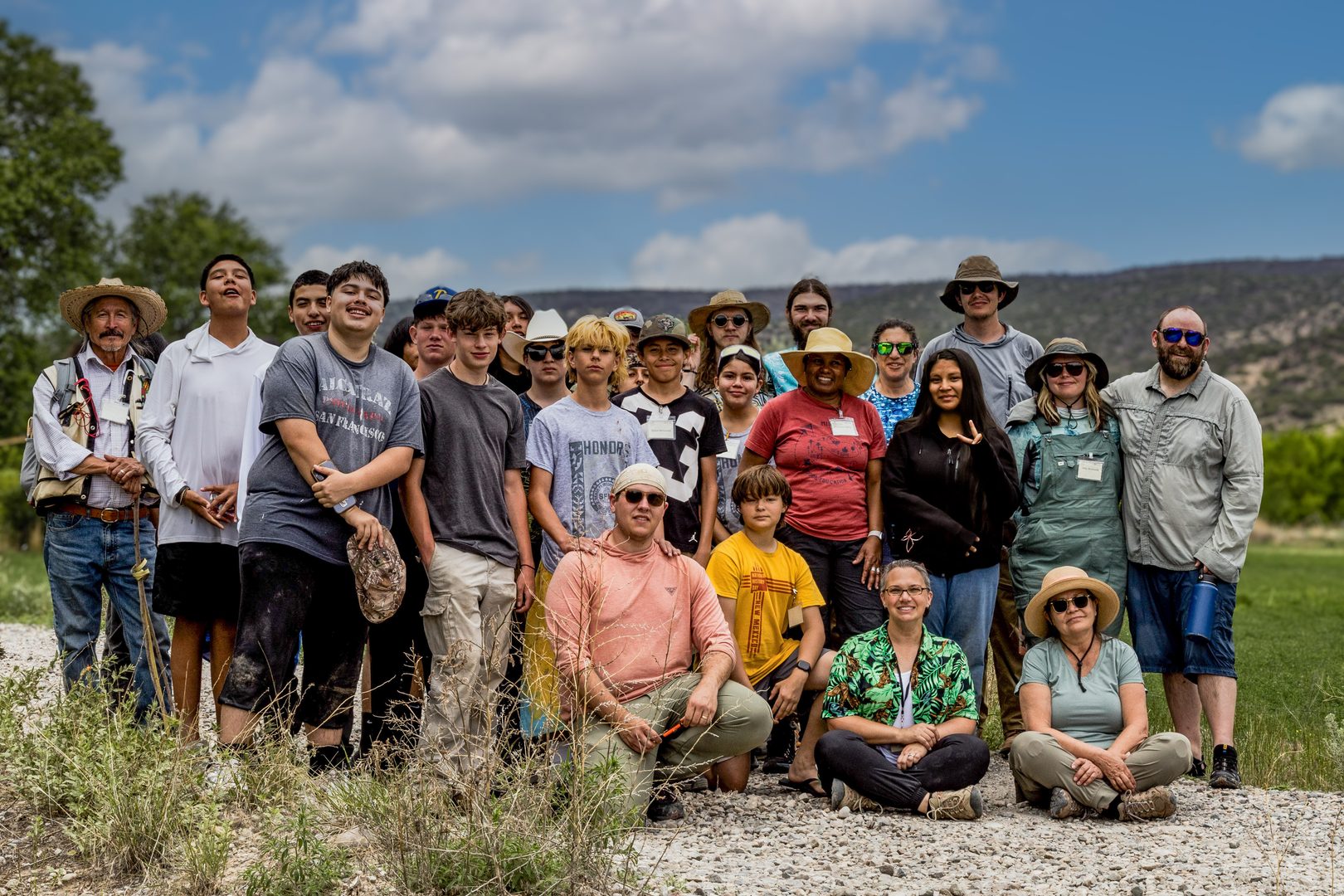
Mesa Prieta is home to thousands of petroglyphs and archaeological features that reflect the rich cultural history of the northern Rio Grande valley. For young people participating in the Mesa Prieta Petroglyph Project’s (MPPP) summer youth internship program, the Wells Petroglyph Preserve also serves as a hands-on classroom for learning how to document, understand and protect these resources.
With support from the New Mexico Outdoor Recreation Division’s Outdoor Equity Fund, MPPP has been able to offer its summer youth internship program to students from communities across northern New Mexico for multiple years. The program provides young people with hands-on opportunities to study archaeology and STEM concepts while learning directly from professionals and Indigenous knowledge holders.
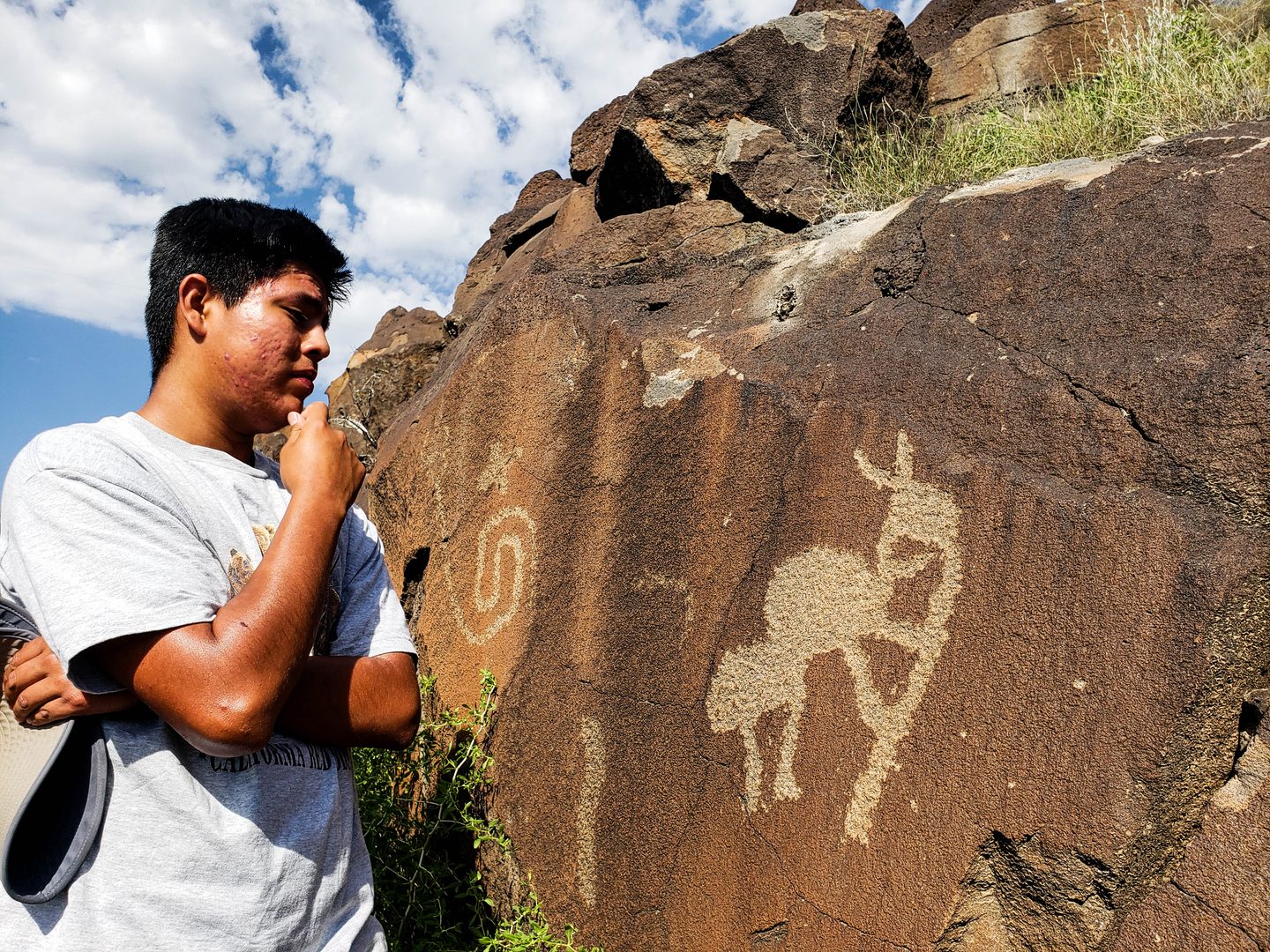
For Mary Sandoval, an Ohkay Owingeh Tribal member and 2025 summer youth intern, the program provided an opportunity to better understand the cultural significance of the landscape around her.
“As a very active member of the Ohkay Owingeh Tribe I feel projects like MPPP are necessary not only because they educate Native people on how important these petroglyphs are to our own culture’s preservation, but also on the flip side this project educates non-Natives about respecting the land and the cultural significance behind these petroglyphs.”
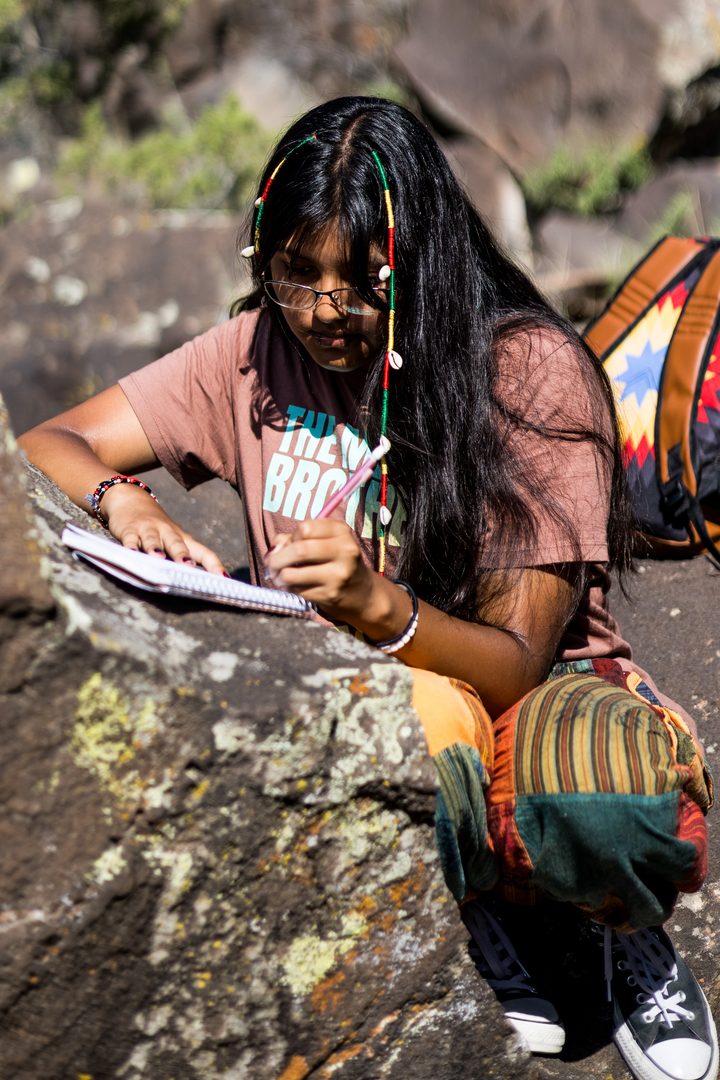
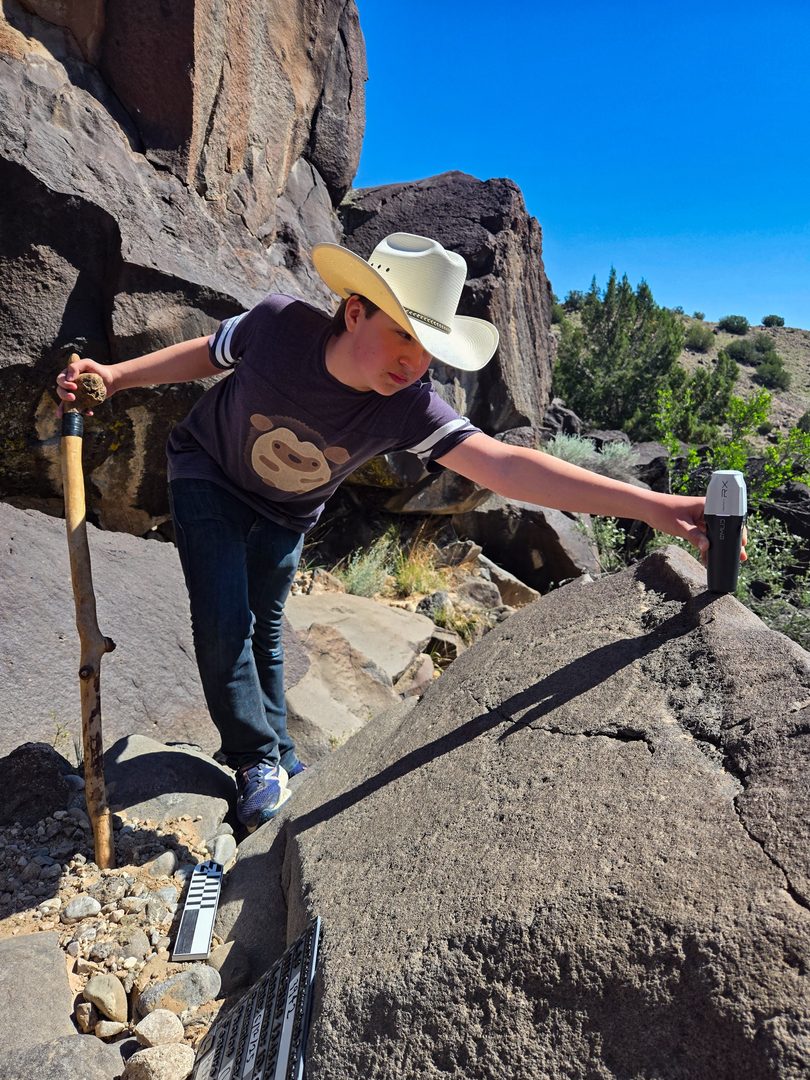
Throughout the summer, interns learn archaeological documentation, scientific methodology and leadership skills through direct, hands-on engagement with Mesa Prieta and the surrounding areas.
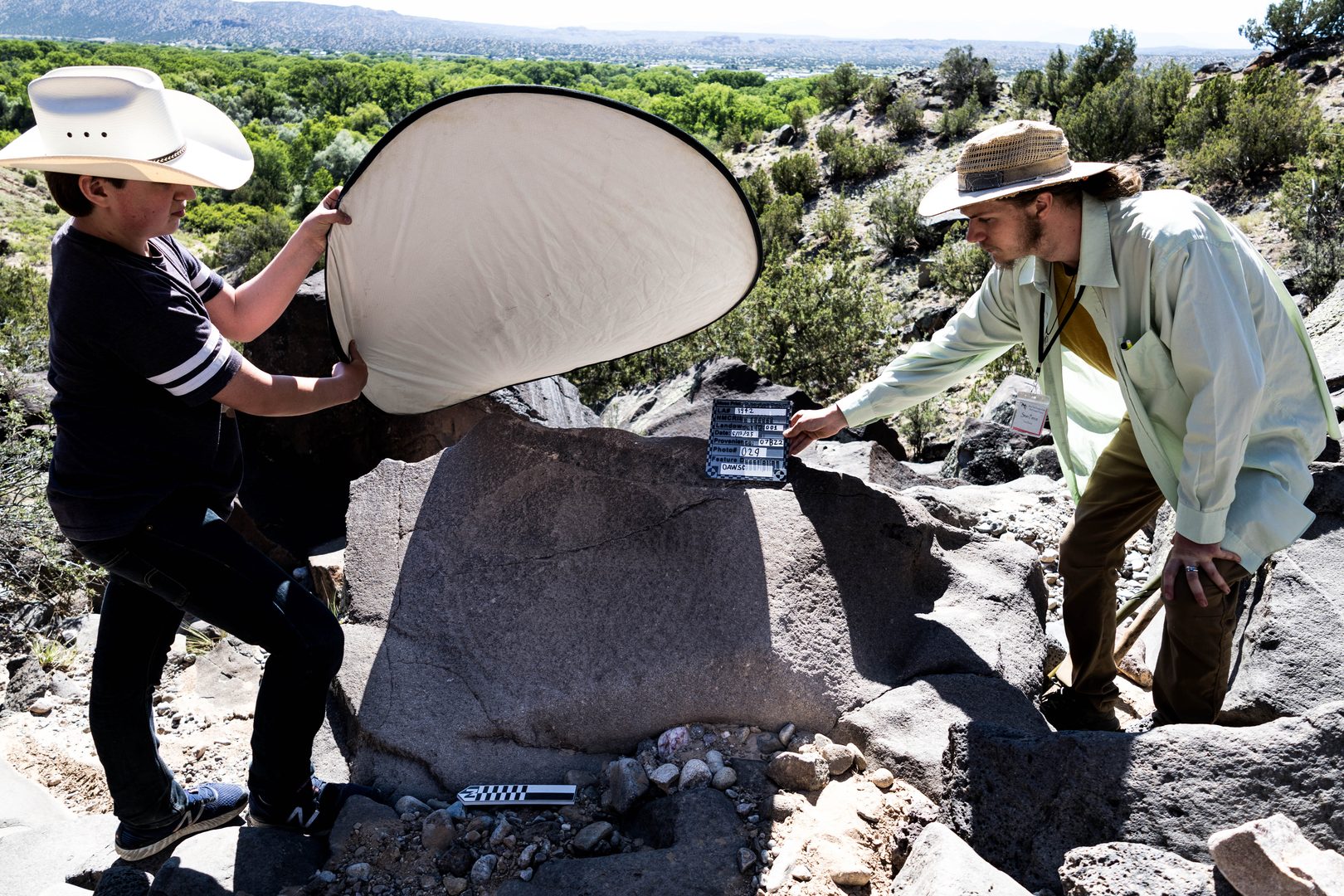
Students use a wide range of tools and technology to survey, document and study archaeological features including DSLR cameras, drones, and high precision Global Navigation Satellite Systems and participate in case studies to evaluate whether high-accuracy GPS units meet MPPP’s documentation needs across the mesa’s complex and rugged terrain. Students also work alongside professionals at Santa Fe-based Aspen Cultural Resource Management Solutions to help conduct drone mapping of archaeological features.
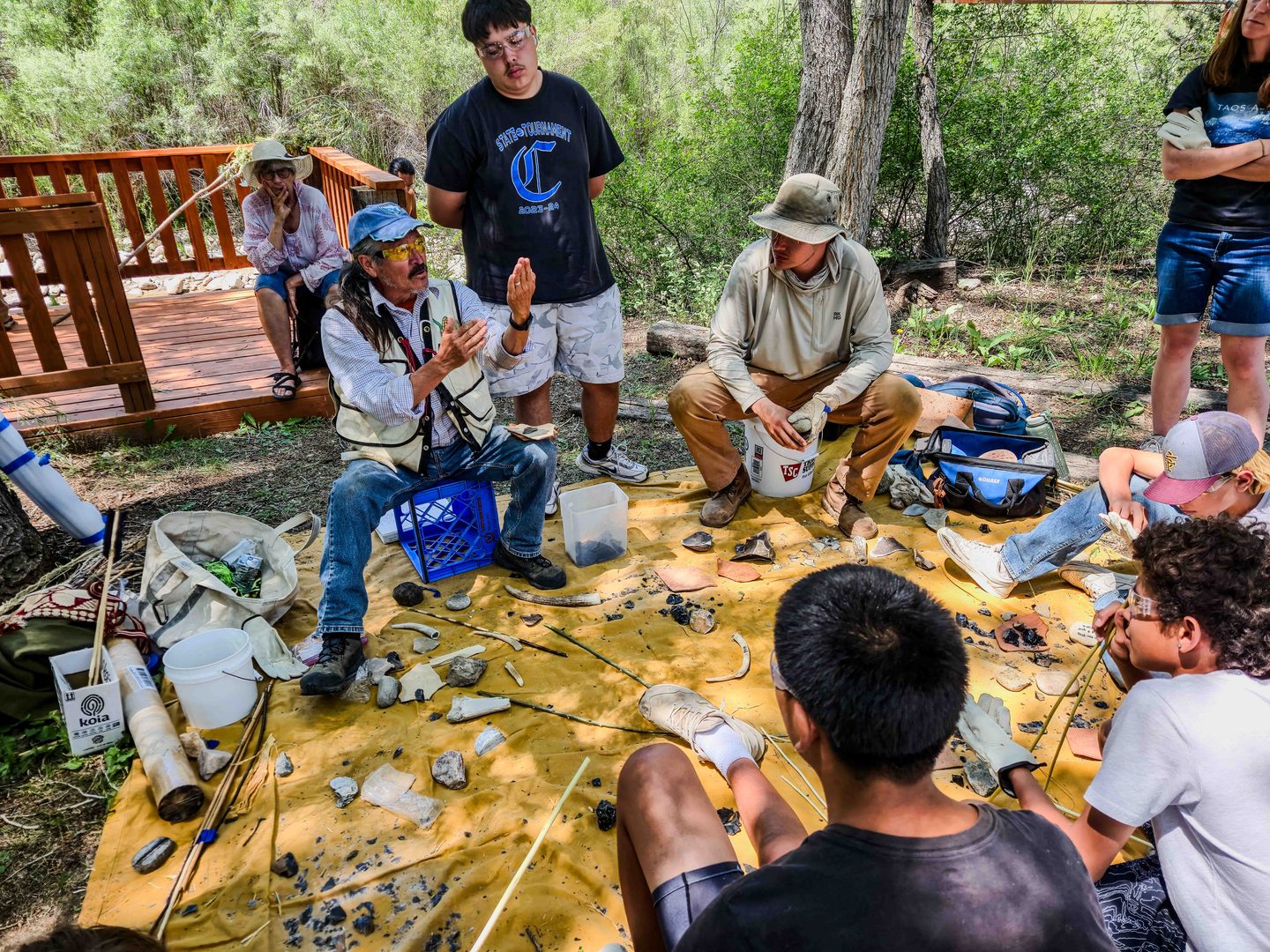
But, modern scientific methods are just one part of understanding and caring for this archaeologically an culturally significant site. MPPP brings Indigenous knowledge holders into the program to give participants deeper cultural context and teach traditional skills like flintknapping, arrow making and native plant uses. That connection between technical skills and traditional knowledge is a key part of the internship experience, giving students multiple ways to understand and care for the places that hold significance for their communities.
The experience culminates in an open house where students lead their friends and families along the trails and share what they have learned. In the process, the students who began the summer as learners finish the program by becoming teachers themselves. By investing in this cycle of hands-on learning and leadership, MPPP is equipping youth with valuable workforce skills and cultural knowledge that they can carry forward into their careers and communities.